
That Detached Studio in Ojai: Is It Really Covered?
Picture this: The Millers, Sarah and Tom, just bought their dream home in Ojai. It’s a charming bungalow, but the real gem? A freestanding art studio out back, tucked under a sprawling oak tree. Sarah, an aspiring painter, already envisions countless canvases coming to life there. They’re thrilled. Everything feels perfect.
But here’s the thing. As they settle in, unpacking boxes and getting to know their new neighborhood, a little question starts nagging at Tom. “Hey, what about that studio?” he asks Sarah one evening. “Is it actually covered by our home insurance? Or is it just… there?”
Good question, Tom. A lot of California homeowners, especially those with detached garages, sheds, guesthouses, or even just a sturdy fence, wonder the same thing. This isn’t just about the main house. It’s about everything else on your property that isn’t connected to your dwelling.
What Counts as an “Other Structure” Anyway?
Honestly, it’s simpler than it sounds. An “other structure” is basically any building or structure on your property that isn’t *attached* to your main house. Think of it as a separate little kingdom.
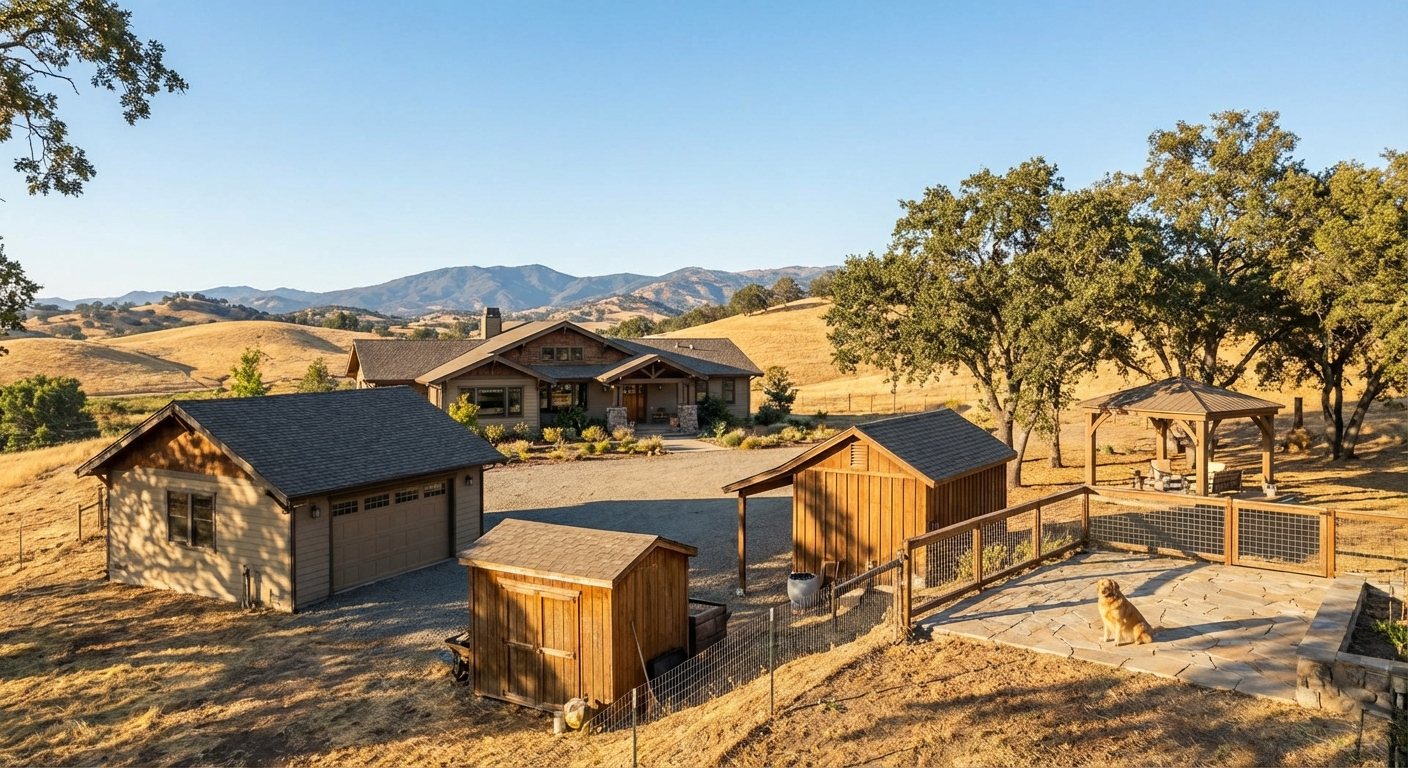
For the Millers, that art studio is a classic example. But it doesn’t stop there. Maybe you’ve got a pool house, a shed for garden tools, a detached garage, a fancy gazebo, or even a dog house that’s bigger than some apartments. Long fences and retaining walls often fall into this category too, though sometimes with specific limits. The key is separation. If you can walk between it and your main home without going through a doorway, it’s probably an “other structure.”

California Risks and Your Backyard Buildings
The Golden State brings its own unique set of challenges. We’ve got wildfires sweeping through areas like Ventura County and the hills above Malibu. We experience earthquakes, even if the big one hasn’t hit lately. Heavy rains can lead to mudslides in burn scars, and strong Santa Ana winds can knock over trees right onto your shed.
These aren’t just threats to your main dwelling. A detached garage full of expensive tools could go up in smoke. A guesthouse could be damaged by a falling oak in a December storm. Even a sturdy fence can be flattened by high winds or a runaway vehicle.
Which brings up something most people miss. If your detached structures are close to the main house, say, within 10-15 feet, they might be more susceptible to damage if the main dwelling catches fire. Embers can travel. Flames can spread. It’s a real concern, especially in high-risk zones.
The Standard 10% Rule: Is It Enough?
Most standard homeowner insurance policies — the HO-3 type that’s common here — include coverage for “other structures.” Typically, this coverage is automatically set at 10% of your main dwelling’s coverage amount.
Let’s say the Millers’ main house is insured for $600,000. Under the 10% rule, their art studio, fence, and anything else detached would have a combined coverage limit of $60,000.
Now, for a small shed or a simple fence, $60,000 might be plenty. But Sarah’s art studio? It’s a nicely built structure, with electricity, plumbing, and a sturdy foundation. What if it would cost $80,000 to rebuild it from the ground up after a fire? The Millers would be short $20,000. That’s a big difference.
Consider the rising cost of construction in California. Materials are more expensive. Labor is pricier. Building permits can be a headache. That $60,000 that sounded okay five years ago might barely cover half the cost of rebuilding today. Premiums jumped 40% between 2022 and 2024 for many Californians, reflecting these higher costs and increased risks. It’s a moving target.
When 10% Simply Won’t Cut It
Honestly, for many Californians, 10% isn’t enough. Especially if you have:
* **A valuable detached garage:** Maybe it houses a classic car or expensive workshop equipment.
* **An ADU (Accessory Dwelling Unit) or guesthouse:** These can be practically a second home, easily costing six figures to build or replace.
* **A sophisticated pool house:** With outdoor kitchens, bathrooms, and high-end finishes.
* **Large, expensive landscaping features:** Think custom pergolas or elaborate outdoor living spaces.
* **A business operating out of a detached structure:** Sarah’s art studio could one day become a place where she sells her work.
If any of these sound like your situation, you probably need to increase your “other structures” coverage. It’s not just about the structure itself, but what’s *inside* it too. Personal property coverage applies to items stored in these structures, but rebuilding the structure itself falls under “other structures.”
Upping Your Coverage: What’s the Catch?
The short answer is yes, you absolutely can increase your “other structures” coverage beyond the standard 10%. The real answer is more complicated.
You’ll need to talk to your insurance agent. They’ll ask for details about the structure: its size, construction materials, what it’s used for, and how much you estimate it would cost to rebuild. Be realistic. Don’t guess low. It’s better to be over-insured by a small margin than under-insured by a lot.
Will it cost more? Of course. Insurance isn’t free. But compare the extra few dollars on your premium each month to the potential six-figure cost of rebuilding a guesthouse out of your own pocket. It’s usually a no-brainer.
Sometimes, if you’re asking for a very high amount for a particularly valuable “other structure” — say, an ADU that’s almost as big as your main house — your insurer might want to treat it as a separate dwelling, or at least rate it more specifically. And if it’s rented out, you’re almost certainly looking at a separate policy or an endorsement that significantly changes your coverage.
Navigating the Choppy California Insurance Waters
It’s no secret the California insurance market has been a bit turbulent lately. We’ve seen major players like State Farm and Farmers make changes, some pulling back from certain high-risk areas. This means getting the right coverage, especially for those “other structures,” can feel like a maze.
That’s where an experienced, local insurance agent like Karl Susman comes in. He and his team at Los Angeles Home Coverage, CA License #OB75129, have been helping Californians find the right coverage for years. They know the nuances of the market, which carriers are still writing policies, and how to properly value structures in places like the Inland Empire or the bustling Valley.
They can help you understand if your insurer offers extended coverage options, or if you might need a different carrier altogether to get the protection you need for that backyard oasis or detached home office. Don’t try to guess. It’s too important.
What Your “Other Structures” Coverage Won’t Do
Even with increased coverage, there are some things your standard policy probably won’t cover for your detached structures:
* **Earthquakes:** This is almost always a separate policy in California. If you’ve got a fancy wine cellar in your detached garage, an earthquake could devastate it. You’ll need an earthquake policy for that.
* **Floods:** Just like the main house, flood damage to your detached structures requires a separate flood insurance policy, typically through the National Flood Insurance Program (NFIP). Heavy rains in areas like San Diego County can cause flash floods, even if you’re not in a designated flood zone.
* **Neglect or lack of maintenance:** If your shed collapses because you let the roof rot for years, don’t expect your insurer to pay for it.
* **Business use (without endorsement):** If Sarah starts selling her paintings from that studio full-time, her standard homeowner’s policy might not cover business-related losses or liabilities without a specific endorsement or a separate business policy.
These are critical distinctions. Many homeowners think “full coverage” means everything, but it rarely does.
Protecting Your California Investment
The Millers eventually sat down with an agent. They learned that their art studio, which they initially thought was just a nice extra, actually represented a significant investment. Rebuilding it would cost more than the standard 10% coverage. They ended up increasing their “other structures” limit, giving Sarah peace of mind as she started painting.
Your home is more than just the main dwelling. It’s the entire property – the yard, the fence, the detached garage where you tinker, the shed that holds your memories, and the guesthouse for visiting family. Each piece plays a part in your life and deserves proper protection.
Don’t leave those other structures to chance. It’s too easy to assume they’re covered, only to find out too late that you’re severely underinsured.
Ready to find out if your detached structures are properly protected? Get a personalized quote today: https://losangeleshomecoverage.com/quote/
Frequently Asked Questions About Other Structures Coverage
1. Does my fence count as an “other structure”?
Usually, yes. Fences, retaining walls, and even detached mailboxes can fall under your “other structures” coverage. The exact limits and types of damage covered might vary, so it’s always smart to confirm with your agent.
2. What if I use my detached garage for a small business?
This is a big one. Standard homeowner policies generally exclude business activities. If you’re running a business out of your detached garage or guesthouse, even a small one, you’ll likely need a specific endorsement on your homeowner policy or even a separate business insurance policy. Talk to Karl Susman at Los Angeles Home Coverage (CA License #OB75129) to discuss your specific needs.
3. Can I get a separate policy just for my guesthouse?
Sometimes. If your guesthouse is particularly valuable, or if you rent it out, your insurer might require it to be insured under a separate dwelling policy, or at least a specific landlord policy endorsement. It really depends on the size, value, and how you use it.
4. If a tree falls on my shed, is it covered?
In most cases, yes, if the tree falls due to a covered peril like windstorm or lightning. Damage from falling objects is typically covered. However, if the tree falls because you neglected to maintain it and it was diseased, that might be a different story.
5. How do I know how much coverage I need for my other structures?
The best way is to get an estimate of the rebuilding cost for each structure. Factor in materials, labor, and potential permit fees. An insurance agent like Karl Susman can help you assess these costs and recommend appropriate coverage limits for your property.
Don’t wait until disaster strikes to question your coverage. Take control of your home’s protection today. Get a personalized quote: https://losangeleshomecoverage.com/quote/
This article is for informational purposes only and does not constitute financial advice.