
“My homeowners insurance will just renew automatically, right?”
Many California homeowners think their insurance policy is a set-it-and-forget-it deal. They pay the bill, and the coverage just rolls over year after year. The short answer is yes, sometimes it does. The real answer, especially here in California, is far more complicated, and honestly, a bit unsettling.
In recent years, the insurance scene across the Golden State has changed dramatically. You’ve seen the news. Insurers like State Farm and AAA have announced they’re pulling back, not writing new policies, or even non-renewing existing ones in certain high-risk areas. Farmers Insurance has tightened its belts too. This isn’t just a rumor; it’s happening to real people in places like the Santa Monica mountains, parts of Ventura County, and the foothills of the Sierra Nevada.
So, what does a non-renewal notice mean? It means your current insurer isn’t offering you coverage for another term. It’s a jarring letter to get, especially if you’ve been with the same company for years. Suddenly, you’re scrambling to find new protection for your biggest asset.
Why would an insurer non-renew my policy?
There are a few big reasons, and they’re often out of your control.
* **Wildfire Risk:** This is the elephant in California’s living room. As climate change fuels more intense and frequent wildfires, insurers are re-evaluating their exposure. If your home is in or near a designated brush fire zone – even if you’ve never had a claim – you might be deemed too risky.
* **Company Strategy:** Sometimes, an insurer simply decides it wants to reduce its overall risk in California. They might stop writing policies in entire counties or regions, regardless of individual homeowners’ claim history. It’s a business decision, plain and simple.
* **Too Many Claims:** While less common for non-renewals driven by statewide issues, if you’ve had a high number of claims – even small ones – your individual risk profile might lead to a non-renewal.
Remember, getting a non-renewal isn’t a reflection of you as a homeowner. It’s often about the broader market and the challenges insurers face here.

“My premium went up, but my coverage is the same, so I don’t need to do anything.”
This is another common trap. Your premium likely *did* go up. Premiums across California have jumped, with many homeowners seeing increases of 20%, 30%, or even 40% between 2022 and 2024. But that doesn’t mean your coverage is necessarily “the same” in terms of what it *needs* to be.
Construction costs have skyrocketed. Labor is more expensive. Materials are pricier. If your home burned down today, rebuilding it would cost significantly more than it would have just a few years ago. That lovely home in the Inland Empire or the San Fernando Valley? Its replacement cost has likely soared.
The silent threat of underinsurance
Many policies automatically adjust your dwelling coverage slightly for inflation each year. But often, it’s not enough to keep pace with real-world rebuilding costs. If your policy says your home is insured for $500,000, but it would actually cost $750,000 to rebuild, you’re underinsured. That’s a huge problem if disaster strikes. You’d be on the hook for the difference.
But wait — here’s where it gets interesting. Some insurers are also quietly changing what’s covered or adding new exclusions, particularly around wildfire. What was once standard might now be an optional add-on or simply unavailable. Just paying the bill without reviewing the actual policy documents is a gamble you don’t want to take.
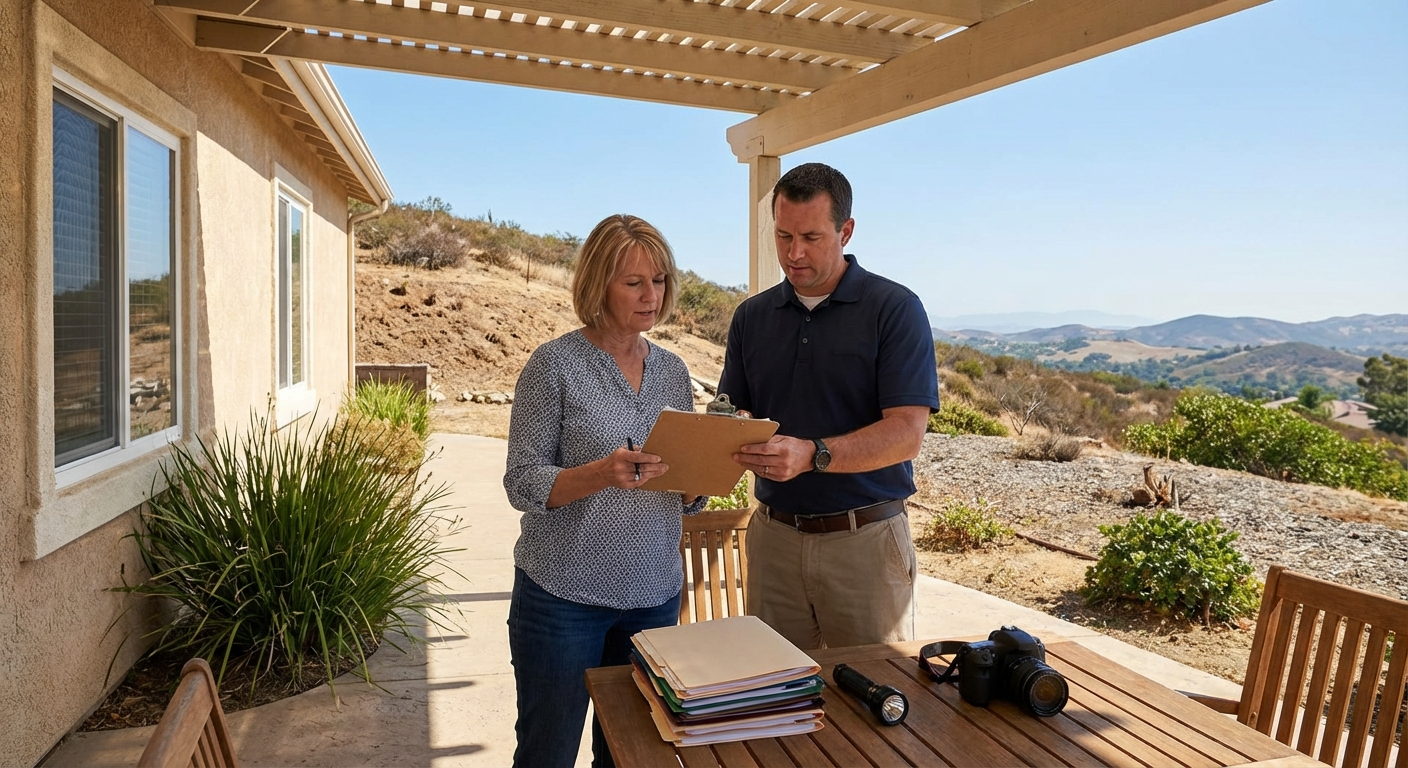
“I’m safe because I haven’t made any claims.”
Having a clean claims history is definitely a good thing. It helps keep your individual rates lower and makes you a more attractive customer. But here’s the thing: in the current California market, a spotless record isn’t a shield against every problem.
If your insurer decides to pull out of your area because of wildfire risk, your lack of claims won’t stop that non-renewal notice. If you live near the canyons of Malibu or the brush-heavy hills of Orange County, your property’s location can be a bigger factor than your personal claim history.
Think about it: an insurer looks at the *aggregate* risk. They’re worried about events like the devastating 2025 LA fires (hypothetically, of course, but it’s a constant threat). One major event can wipe out billions for an insurer, making them very cautious about where they offer coverage. Your single, well-maintained home is part of that larger equation.
“I can just wait until the last minute to find new insurance.”
Honestly? This is one of the biggest mistakes you can make. If you get a non-renewal notice, you typically have 60 days. That might sound like a lot of time. It’s not.
Finding new homeowners insurance in California, especially in a high-risk area, can be a marathon, not a sprint. Many carriers are hesitant to write new business. You might get quoted astronomical rates. You might find policies with significant exclusions.
The California FAIR Plan: A last resort, not a first choice
If you can’t find coverage in the traditional market, the California FAIR Plan is there. It’s a state-mandated program designed to provide basic fire insurance for properties that can’t get it elsewhere. But it’s basic. It often doesn’t cover things like liability, theft, or water damage – all standard in a normal homeowners policy. You’d likely need to purchase a “Difference in Conditions” (DIC) policy from another insurer to fill those gaps. That’s two policies to manage, often at a higher combined cost.
Starting early gives you options. It gives you time to compare policies, understand the nuances, and work with an experienced agent.
Don’t wait until the clock is ticking. Get a head start on your renewal. **Get a Home Insurance Quote Today!**
“All insurance policies are basically the same, so I’ll just pick the cheapest one.”
This couldn’t be further from the truth. Homeowners insurance policies are complex legal contracts. Comparing them solely on price is like buying a car based only on its sticker price, ignoring the engine, safety features, or warranty.
A cheap policy might be cheap for a reason. It could have lower dwelling coverage, high deductibles, or exclude things you think are covered, like certain types of water damage or personal property limits.
What to look for beyond the price tag:
* **Dwelling Coverage (Coverage A):** This is the cost to rebuild your home. Make sure it’s adequate for current construction costs.
* **Other Structures (Coverage B):** Covers things like detached garages, fences, sheds.
* **Personal Property (Coverage C):** Protects your belongings. Check limits for high-value items like jewelry or art – they often need separate endorsements.
* **Loss of Use (Coverage D):** Pays for temporary living expenses if your home is uninhabitable after a covered loss.
* **Liability (Coverage E):** Protects you if someone is injured on your property or you accidentally cause damage to someone else’s property.
* **Medical Payments (Coverage F):** Covers medical expenses for guests injured on your property, regardless of fault.
Then there are endorsements – those little add-ons that can make a huge difference. Extended replacement cost, service line coverage, water backup coverage, earthquake, flood… the list goes on. Ignoring these details just to save a few bucks could leave you financially devastated after a claim.
“My agent handles everything, so I don’t need to read my renewal papers.”
While a good independent agent like Karl Susman of Los Angeles Home Coverage (CA License #0B75129) is invaluable, your insurance is ultimately *your* responsibility. Agents can guide you, explain options, and help you find the best fit, but they can’t force you to read your policy documents.
Here’s why you absolutely *must* review your renewal papers:
* **Changes in Coverage:** As mentioned, insurers are tweaking policies. A specific exclusion for brush fire might appear. Your extended replacement cost percentage might change.
* **Deductibles:** Your deductible might have increased. A higher deductible means you pay more out of pocket before your insurance kicks in.
* **Premium Breakdown:** Understand what you’re paying for. Is it mostly for dwelling? Is there a big chunk for wildfire risk?
* **New Requirements:** Your insurer might suddenly require you to harden your home – clear brush, install a fire-resistant roof, or update vents – to maintain coverage.
Ignoring these changes is like driving blindfolded. You won’t know you have a problem until it’s too late.
An independent agent like Karl Susman works for you, not the insurance company. They can shop around multiple carriers and explain the fine print. Don’t go it alone.
Ready to understand your renewal options and ensure you’re properly protected? **Connect with Karl Susman and get a personalized quote for your California home insurance.**
Frequently Asked Questions About California Home Insurance Renewals
What should I do if my insurer sends me a non-renewal notice?
Don’t panic, but act fast. Contact an independent insurance agent right away. They can shop the market for you, explain your options, and help you understand if the FAIR Plan is your only choice. Start this process as soon as you receive the notice, not a week before your policy expires.
How can I potentially lower my home insurance premium in California?
There are several ways. Consider increasing your deductible, which lowers your premium but means more out-of-pocket if you file a claim. You can also ask about discounts for home hardening (fire-resistant materials, brush clearance), security systems, multi-policy bundling, or being claims-free. Some carriers offer discounts for new roofs or even being part of certain professions.
Does my credit score affect my home insurance premium in California?
Yes, in California, insurers can use credit-based insurance scores as one factor in determining your premium. A higher score often indicates a lower risk to insurers, potentially leading to a lower premium. It’s not the only factor, but it does play a role.
What’s the difference between “replacement cost” and “actual cash value” for my personal belongings?
This is a big one. **Replacement cost** pays to replace your damaged or stolen items with new ones, without deducting for depreciation. **Actual cash value (ACV)** pays you the depreciated value of the item. For example, if your 5-year-old TV is stolen, replacement cost might give you enough to buy a brand new one. ACV would give you what that 5-year-old TV was worth right before it was stolen. Always aim for replacement cost coverage for your personal property.
Should I file a small claim?
Generally, no. Filing a small claim (e.g., a few hundred dollars more than your deductible) can sometimes lead to a premium increase or even make you appear riskier to your insurer. It’s often better to pay for small repairs out-of-pocket. Save your insurance for the big, catastrophic losses it’s truly designed for.
The truth about California home insurance renewals is that the rules are changing. They’re changing fast. Staying informed and proactive isn’t just a good idea; it’s essential for protecting your home and your financial future.
This article is for informational purposes only and does not constitute financial advice.