
Feeling the Burn: California Home Insurance and the Wildfire Challenge
For many California homeowners, just the thought of insuring their property against wildfire feels like a punch to the gut. You’ve probably seen the headlines. Maybe you’ve even lived through the nightmare of an insurer sending a non-renewal notice, or had your premium jump a staggering 40% in a single year, like so many did between 2022 and 2024. It’s a stressful situation, a real worry that keeps people up at night, especially if you live in places like the hills of Ventura County or the brush-heavy areas of the Inland Empire. You work hard for your home, and feeling like you can’t protect it properly? That’s a terrible feeling.
Honestly, it’s not just your imagination. The state’s insurance market has been in a tough spot. Insurers like State Farm and Allstate have pulled back, limiting new policies. Farmers and AAA have adjusted their offerings too. The simple truth is, wildfires are getting worse, hotter, and more frequent. The risk is immense, and insurance companies, at their core, are in the business of managing risk. When that risk becomes too unpredictable, too expensive, they react. It leaves homeowners scrambling, often turning to the California FAIR Plan — a program designed as a last resort, but one that often comes with higher costs and more limited coverage.
A Glimmer of Hope: The Shift Towards Mitigation
But here’s where it gets interesting. While the challenges are real, there’s a growing movement to change the narrative. Instead of just reacting to fires, the focus is shifting to *preventing* them, or at least minimizing their damage. This is where wildfire mitigation comes into play, and it’s starting to make a real difference in the insurance world. Think of it as taking control back, one defensible space project at a time.
For a long time, insurance companies didn’t really distinguish between a home that was ready for a fire and one that wasn’t. Two houses, side-by-side, one meticulously cleared, the other surrounded by dry brush, might have paid similar premiums. That always felt unfair, didn’t it? It didn’t reward the hard work homeowners put into protecting their property.

California’s Push for Discounts: CDI Regulations
Now, thanks to new regulations from the California Department of Insurance (CDI), that’s changing. Insurance Commissioner Ricardo Lara has been pushing for insurers to offer discounts for homes that meet specific wildfire mitigation standards. This isn’t just a suggestion; it’s becoming a requirement. The idea is simple: if you reduce your risk, your insurer should recognize that with a lower premium. It’s a win-win. You make your home safer, and you potentially save money.
What exactly do these mitigation efforts look like? Well, the new rules generally focus on two key areas: defensible space and home hardening.
Defensible Space: Your Home’s Invisible Shield
Defensible space is all about creating a buffer around your home, a zone where fire has less fuel to burn. It’s not about clear-cutting everything; it’s about smart landscaping and maintenance.
* **Zone 0 (Ember-Resistant Zone, 0-5 feet from home):** This is the most critical area. You’ll want to remove all combustible materials. Think no flammable plants, no wood mulch, no patio furniture made of highly combustible materials. Keep this area clear, clean, and green. Even something as small as a pile of leaves against your foundation can be an ember’s entry point.
* **Zone 1 (5-30 feet from home):** Here, you reduce fuel. Trim branches, remove dead plants, space out shrubs. Imagine a ladder for fire – you want to break every rung. Keep grass cut short.
* **Zone 2 (30-100 feet from home):** This outer zone focuses on reducing the intensity of a fire. Thin out dense vegetation, remove dead trees and shrubs, and make sure any remaining plants are well-spaced and maintained.
Honestly, creating defensible space isn’t always easy. It’s often hard, sweaty work, or it means hiring someone to do it. But it’s also one of the most effective ways to protect your property and your family.
Home Hardening: Building a Fortress Against Fire
Defensible space is outside. Home hardening is all about making your actual house more resistant to embers and flames. Most homes don’t burn down because of direct flame contact from a massive wildfire front. They burn because embers — tiny, glowing pieces of debris — fly ahead of the fire, land on vulnerable spots, and ignite the house. Think of the 2025 LA fires scenario, where embers could travel miles.
Here are some common home hardening measures:
* **Roofs:** Replace old wood shake or shingle roofs with fire-resistant materials like tile, metal, or composition shingles rated Class A.
* **Vents:** Install 1/8-inch metal mesh screens over all attic, foundation, and other vents to prevent embers from entering.
* **Eaves and Soffits:** Enclose open eaves and soffits to block ember entry.
* **Windows:** Upgrade to multi-pane, tempered-glass windows, especially on sides facing potential fire hazards.
* **Siding:** Replace wood or vinyl siding with fire-resistant materials like stucco, fiber cement, or treated wood.
* **Decks:** Remove combustible materials from under and around decks. Consider replacing wood decks with fire-resistant alternatives.
* **Gutters:** Keep gutters clear of leaves and debris, as these can easily catch embers. Consider non-combustible gutter guards.
The Process: Getting Your Discount
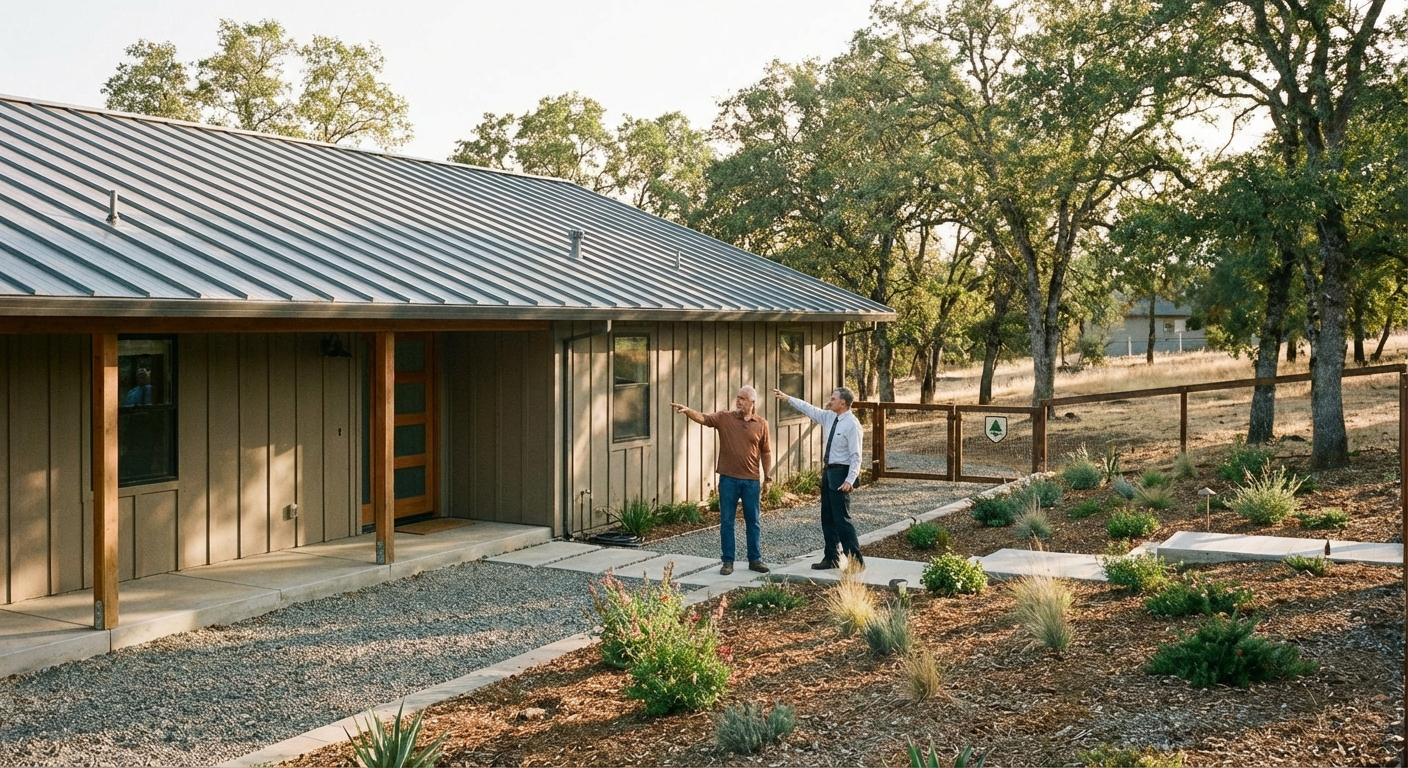
So, you’ve done the work. Now what? Getting the discount isn’t always automatic. You’ll likely need to provide documentation to your insurer. This might include photos of your mitigated property, receipts for materials or services, or even a professional wildfire risk assessment from a qualified third party. Some insurers might send out their own inspectors.
This is where having an experienced insurance agent really helps. They can guide you through the specific requirements of different carriers. Not every insurer offers the same discounts, and the criteria can vary. Some might focus heavily on roof materials, others more on defensible space.
Which brings up something most people miss: even if you’ve done the work, you still need to find an insurer willing to write a policy in your area *and* offer those discounts. The market is still tight. That’s why working with an agency like Los Angeles Home Coverage, with someone like Karl Susman (CA License #OB75129), can be incredibly valuable. They know the landscape, they know which carriers are offering what, and they can help you present your mitigation efforts in the best light.
Beyond the Discount: The Real Value
Sure, saving money on your premium is a big motivator. Who doesn’t want that? But the real value of wildfire mitigation goes far beyond a few hundred dollars off your annual bill. It’s about peace of mind. It’s about knowing you’ve done everything you can to protect your home and your family. When those Red Flag warnings come out, you can breathe a little easier, knowing your property is prepared.
It’s also about community. When one home hardens, and one neighbor clears their defensible space, it helps protect the whole neighborhood. Wildfires don’t respect property lines.
If you’ve put in the effort, you deserve to be rewarded for it. Don’t let the frustration of the current insurance market deter you. There are ways to improve your situation, and mitigation is at the top of the list.
Ready to see how your mitigation efforts might translate into real savings? It takes just a few minutes to explore your options.
Get a Home Insurance Quote Today!
Finding the Right Partner in a Challenging Market
Navigating California’s home insurance market feels like walking through a minefield these days. Many homeowners feel lost, frustrated, or simply resigned. You might have tried calling a few big-name companies only to be told they aren’t writing new policies in your zip code. Or perhaps you’ve received a quote that felt impossibly high. It’s a common experience, and it’s completely understandable to feel overwhelmed.
But here’s the thing: you don’t have to go it alone. An independent insurance agent works for *you*, not for a single insurance company. They have access to multiple carriers, including those who might be more receptive to properties with strong mitigation efforts. They can explain the nuances of Proposition 103, the FAIR Plan, and how these new mitigation discounts fit into the bigger picture. Karl Susman and the team at Los Angeles Home Coverage have been helping Californians with these exact challenges for years. They understand the unique risks here, from the Santa Anas in Southern California to the dry lightning strikes up north.
They’ll ask the right questions, help you document your mitigation efforts, and then shop around to find you the best possible coverage and discounts. It’s about getting personalized advice, not a one-size-fits-all solution.
Don’t let the current market make you feel powerless. Take the first step towards securing better coverage and potentially lowering your costs.
Click Here to Get Your Customized Home Insurance Quote!
Frequently Asked Questions About Wildfire Mitigation Discounts
What specific mitigation standards qualify for discounts?
Generally, insurers look for compliance with the “Safer from Wildfires” framework developed by the California Department of Insurance, CAL FIRE, and the Office of Emergency Services. This includes maintaining defensible space (Zones 0, 1, and 2) and specific home hardening measures like fire-resistant roofs, ember-resistant vents, and multi-pane windows. The exact requirements can vary slightly by insurer, but these are the main pillars.
Do I need an inspection to get a discount?
Often, yes. Some insurers will require an inspection by their own adjusters or a third-party certified fire-risk assessor. Others might accept detailed photos and documentation you provide. It’s always best to check with your agent or potential insurer about their specific verification process.
Can I get a discount if I’m on the FAIR Plan?
The California FAIR Plan itself doesn’t typically offer mitigation discounts in the same way traditional insurers do. However, making your home safer through mitigation can make you a more attractive risk to traditional insurers. If you can move off the FAIR Plan to a standard market policy, you’re much more likely to find those mitigation discounts. It’s a strong incentive to mitigate, even if you’re currently on the FAIR Plan.
What if I’ve already mitigated my home? Can I still get a discount?
Absolutely. If you’ve already invested in defensible space and home hardening, you should inform your current or prospective insurer. Provide them with any documentation you have – photos, receipts, or inspection reports. They should be able to apply eligible discounts to your policy, assuming they offer them and your mitigation meets their criteria.
How long does it take for a discount to be applied?
Once your mitigation efforts are verified and approved by the insurer, the discount should be applied to your policy relatively quickly, often at your next renewal or even mid-term, depending on the carrier’s policy. Your agent can help you confirm the timeline and ensure the discount is properly reflected.
This article is for informational purposes only and does not constitute financial advice.