
The Silent Threat: How an Empty California Home Can Void Your Insurance
Most homeowners in California think their standard policy covers their house no matter what. They pay their premiums, they get their paperwork, and they assume they’re set. But here’s the thing: if your house sits empty for too long, you might be in for a rude awakening when you file a claim. We’re talking about vacancy clauses – those little lines in your policy that can strip away your coverage faster than a wildfire through dry brush in Ventura County.
What exactly is a vacancy clause?
Simply put, a vacancy clause is a condition in your homeowner’s insurance policy that limits or even cancels coverage if your home becomes vacant for a specific period. This period usually runs somewhere between 30 and 90 days. If your house is empty beyond that threshold, and you haven’t told your insurer, any damage might not be covered. You could have a burst pipe, a break-in, or even a small kitchen fire — and your insurer could point right to that clause and say, “Sorry, no coverage.”

Is “vacant” the same as “unoccupied”? Many people think so — here’s the truth.
Honestly, this is where most folks get tripped up. The short answer is no. The real answer is more complicated, and it makes a huge difference.
An “unoccupied” home means no one is living there, but all the furniture, utilities, and personal belongings are still inside. You might be on an extended vacation to Europe for a few months, or you’re temporarily staying with family. Your home is still “ready” for you to move back in. Insurers typically have a bit more leniency here, often covering unoccupied homes for several months, sometimes even up to a year, depending on the policy.
A “vacant” home, on the other hand, is completely empty. No furniture. No clothes in the closet. The utilities might even be turned off. It looks like no one lives there, and no one intends to return anytime soon. Think of a house that’s just been sold, or one that’s been inherited and is awaiting sale. That’s vacant. Insurers see this as a much higher risk.
Why do insurers care so much about empty homes?
It boils down to risk, plain and simple. An empty house is a target. Criminals know no one’s home, making it easier for theft and vandalism. A small leak under the sink might go unnoticed for weeks, turning into a massive mold problem or structural damage. If a squirrel chews through some wiring and starts a fire, there’s no one there to call 911 immediately.
Think about the sheer number of homes in the Inland Empire or the Valley that might sit empty for months, especially during market slowdowns or after an owner passes away. Insurers like State Farm, AAA, and Farmers are constantly assessing their exposure. With the rising threat of wildfires across California – say, a hypothetical 2025 LA fire season – they’re even more sensitive to properties that could go up in smoke without anyone to mitigate the risk. An empty house is a ticking time bomb of potential claims.
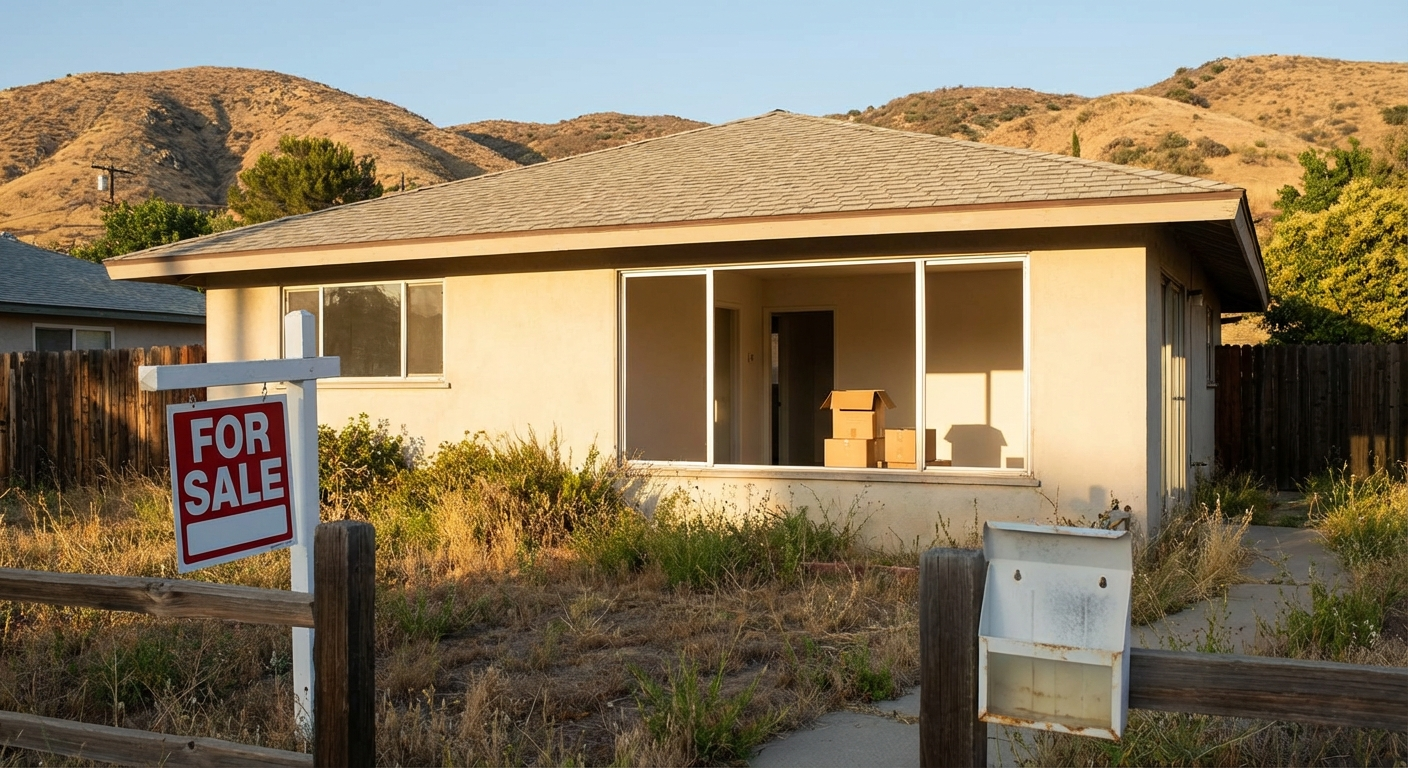
Common Scenarios Where Vacancy Clauses Bite
It’s easy to assume this won’t happen to you. But these clauses pop up in all sorts of ordinary situations.
Selling a house that sits empty
You’ve moved out of your old place, perhaps into a new home across town or even out of state. The old house is listed, but the market’s slow, or you’re doing some last-minute touch-ups. Days turn into weeks, weeks into months. Before you know it, 60 days have passed. If a pipe bursts or someone breaks in during that time, your standard homeowner’s policy could deny your claim. That’s a huge financial hit you weren’t expecting.
Renovations and extended trips
Maybe you’re gutting the kitchen and bathrooms, planning a major remodel. You decide to move out for three months while the contractors work. Or perhaps you’re taking that dream six-month sabbatical through Southeast Asia. Your home isn’t technically “empty” if your furniture is still there, but if it’s stripped down to the studs for a remodel, or if you’re gone for more than a few months, it starts looking awfully vacant to an insurer. It’s a fine line, and it’s always best to check.
Inherited homes and probate
This is a really common one. A loved one passes away, and you inherit their home. It’s filled with memories, but it’s also filled with stuff you need to sort through. Probate takes time. Selling takes time. Often, these homes sit empty for months, sometimes over a year, while legal issues are resolved or the property is prepared for sale. That’s a prime target for vacancy clause issues. Many families don’t even think about the insurance policy until it’s too late.
Landlords with gaps between tenants — many people think their landlord policy protects them. That’s not always true.
You own a rental property, and your last tenants moved out. You’re doing some repairs, sprucing the place up, and looking for new renters. The house sits empty for 45 days. You have a landlord policy, so you’re covered, right? Not necessarily. Many landlord policies have their own version of a vacancy clause, often even stricter than standard homeowner policies. They might not call it “vacancy,” but they’ll have language about the property being “owner-occupied” or “tenant-occupied.” An empty rental property creates a gap in that occupancy, and that can mean a gap in your coverage.
What Happens if My Home is Vacant and I Don’t Tell My Insurer?
This is the part that keeps insurance agents up at night – and should make homeowners a little nervous.
Claim Denials: The Harsh Reality
If your home becomes vacant, and you don’t inform your insurance company, they have every right to deny a claim. Imagine a fire rips through your vacant house in Santa Clarita. You call State Farm or Farmers, expecting them to cover the damages. They investigate, find out the house has been empty for 90 days, and boom – claim denied. You’re on the hook for rebuilding costs, which in California, could be hundreds of thousands, if not millions, of dollars. It’s a devastating financial blow.
The California FAIR Plan and Vacancy
Even California’s “insurer of last resort,” the FAIR Plan, has rules about vacancy. The FAIR Plan is designed to provide basic property insurance for those who can’t get it in the standard market, often due to high wildfire risk. While it might offer some coverage for vacant properties, it’s usually very limited, comes with higher deductibles, and still has strict guidelines about how long a property can remain empty. You can’t just assume the FAIR Plan will pick up the slack if your regular policy bails on you. Its purpose is specific, and vacancy can complicate things there, too.
Protecting Yourself: Steps to Take
So, what can you do to avoid this nightmare scenario? Plenty.
Talk to Your Agent, Seriously
This is the most important step. As soon as you know your home might be empty for more than a couple of weeks, call your insurance agent. Someone like Karl Susman at Los Angeles Home Coverage, CA License #0B75129, can really help here. Just give them a call at (877) 411-5200. They can review your policy, explain the exact vacancy clause language, and discuss your options. They might be able to add an endorsement or rider to your existing policy, which extends coverage for a vacant property for a certain period. This often comes with an additional premium, but it’s a small price to pay for peace of mind.
Consider a Vacant Home Policy (Yes, they exist!)
If your home will be vacant for an extended period – say, six months or more – a specific vacant home insurance policy might be your best bet. These policies are designed specifically for empty properties. They often provide more limited coverage than a standard homeowner’s policy, focusing on perils like fire, vandalism, and liability, but they explicitly cover the vacancy risk. They’re more expensive, no doubt, but they ensure you’re protected. If you’re looking for options, you can get a quote right now at https://losangeleshomecoverage.com/quote/.
Regular checks and maintenance
Even with a vacant home policy, it’s smart to have someone check on the property regularly. Have a friend, neighbor, or property manager visit the house at least once a week. They can look for signs of forced entry, check for leaks, make sure the utilities are functioning correctly, and generally keep an eye on things. This proactive approach can prevent small problems from becoming massive claims. It shows the insurer you’re taking steps to reduce risk, too.
You’ve worked hard for your California home. Don’t let a seemingly small detail like an empty house leave you exposed. A little planning and communication with your insurance professional can save you a mountain of headaches and a fortune in potential losses. If you’re worried about your home’s status, or just want to explore your options, don’t wait. Get a quote today and secure your peace of mind: https://losangeleshomecoverage.com/quote/.
Frequently Asked Questions About Vacancy Clauses
What happens if I tell my insurer my home is vacant? Will my rates go up?
Yes, your rates will almost certainly go up. Insurers see vacant homes as higher risk, so they charge more to cover that risk. However, it’s far better to pay a slightly higher premium than to have a claim denied altogether.
How long can my home be empty before it’s considered “vacant”?
Most standard homeowner policies define “vacant” after 30 to 90 consecutive days of no one living there and no personal property. Always check your specific policy language, or better yet, ask your insurance agent.
Can I just have a friend stay at my vacant house to avoid the clause?
Potentially, yes. If someone is genuinely living there, even temporarily, with their belongings, and using the utilities, it likely wouldn’t be considered vacant. But it needs to be legitimate occupancy, not just someone checking the mail once a week.
If I’m renovating, does that count as vacant?
It depends. If you’ve moved out and the house is completely stripped down, with no one living there, it could certainly be seen as vacant. If it’s a minor renovation and you’re still living in the home, probably not. Always disclose the situation to your agent.
Does Prop 103 protect me from vacancy clause denials?
Prop 103 is a California law that regulates insurance rates and provides some consumer protections. While it’s important for fair rates and practices, it doesn’t override the terms and conditions of your policy, including vacancy clauses. If your policy explicitly states coverage is void during vacancy and you haven’t complied, Prop 103 won’t magically reinstate your coverage.
***
This article is for informational purposes only and does not constitute financial advice.