
The Shifting Sands of California Home Insurance and Your Roof
You’ve probably felt it. That knot in your stomach when you think about your home insurance. For many Californians, it’s not just a bill; it’s a source of real anxiety. We live in a beautiful, dynamic state, but that beauty comes with its own set of challenges—wildfires, atmospheric rivers, earthquakes. All of it makes insuring your home here a complicated business.
But here’s where it gets interesting. While the big, dramatic disasters grab headlines, one of the most common and often frustrating claims homeowners face involves their roof. Your roof is your home’s first line of defense, a silent guardian against the elements. When it’s damaged, it feels personal. And dealing with an insurance claim for it? That can feel like a battle.
Honestly, it’s not just you. Homeowners across the state—from the coastal breezes of Ventura County to the scorching summers of the Inland Empire and the sprawling neighborhoods of the Valley—are grappling with a home insurance market that feels increasingly unpredictable. Insurers are tightening their belts, premiums are climbing, and what used to be a straightforward claim can now be a maze of policy language and adjuster decisions.
Why Your Roof is Under the Microscope
Think about the sheer age of so many California homes. Lots of properties built in the 70s, 80s, even 90s, still have their original roofs or ones that are pushing two decades old. Asphalt shingles, while common, have a lifespan. Tile roofs hold up better, but even they can crack or shift. Metal roofs are durable, but pricey to install and repair.
Insiders know that a roof isn’t just a roof to an insurance company. It’s a risk indicator, a crystal ball. A newer, well-maintained roof tells them one story: less chance of leaks, fewer wind-lifted shingles, generally lower risk. An older roof? Especially one that hasn’t seen regular maintenance or is showing signs of wear from years of baking sun and seasonal downpours? That’s a different narrative entirely. It raises questions. Lots of them.

Understanding Roof Damage Claims: What’s Covered, What’s Not?
So, your roof has a problem. Maybe a winter storm ripped off some shingles. Perhaps a sudden, severe hailstorm pounded your roof. These kinds of events—sudden, accidental, unexpected—are generally what your standard homeowner’s policy is designed to cover. You’d expect them to step in, right?
But that’s not the whole story. What your policy typically won’t cover is damage from normal wear and tear. It won’t pay for a roof that’s simply old and finally gave out. It won’t cover neglect. If you let a small leak go for years, causing widespread rot, don’t expect your insurer to foot the whole bill. This is where a lot of friction happens between homeowners and their insurance companies.
Then there are deductibles. Most policies have them, and for roof claims, they can be significant. Some policies even have separate, higher deductibles for specific perils like wind or hail damage. You might have a $2,500 standard deductible, but a $5,000 wind deductible. Big difference.
The ACV vs. RCV Showdown
This is arguably the most important distinction you need to understand about roof damage claims: *Actual Cash Value (ACV)* versus *Replacement Cost Value (RCV)*. This isn’t just insurance jargon; it’s a financial reality that can make or break your ability to repair your roof.
Let’s break it down simply. Say your roof is 15 years old.
With an **RCV policy**, if your roof is damaged, the insurance company pays to replace it with a brand new, similar-quality roof. They might initially pay you the ACV, then pay the “depreciation” amount once the work is done and you’ve submitted receipts. The goal is to get you a new roof, less your deductible.
But with an **ACV policy**, they only pay you what your 15-year-old roof was *worth* at the time of the damage. They factor in depreciation for its age and condition. So, if a brand new roof costs $20,000, but your 15-year-old roof is only valued at $8,000 after depreciation, that’s what you’ll get, minus your deductible. You’re left to pay the vast majority of the replacement cost out of your own pocket.
Here’s the harsh truth for California homeowners: many insurers are increasingly moving towards ACV policies for roofs, especially older ones, or for roofs made of certain materials. It’s a cost-saving measure for them, but a significant burden for you. This shift is a direct response to the higher risks and costs in the California market.
Navigating the Claim Process: Your Best Bet
Dealing with roof damage can be stressful. But you can make the process smoother, even if it feels daunting.
First things first: **before** any damage happens, take pictures of your roof. Get a drone shot if you can. Keep records of its age, the materials used, and any maintenance you’ve done. This documentation is gold if you ever need to file a claim.
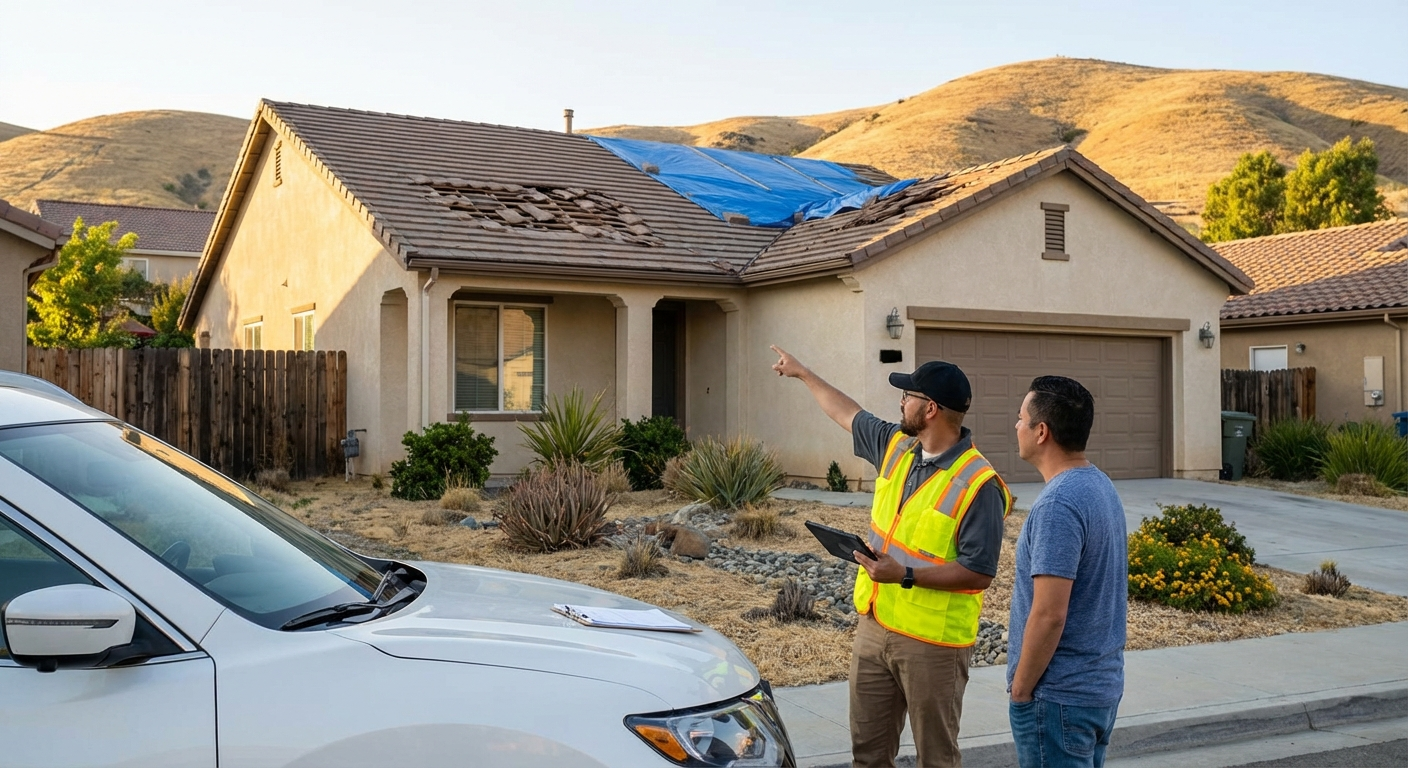
Once damage occurs, your priority is safety. Then, document everything. Take photos and videos of the damage from every angle. Make temporary repairs to prevent further damage, like tarping, but don’t start major work until you’ve spoken with your agent. Keep all receipts for those temporary fixes.
Which brings up something most people miss. Don’t call the 1-800 number on your policy card first. Call your agent.
The Importance of a Good Agent
An independent agent, someone like Karl Susman at Los Angeles Home Coverage, isn’t just selling you a policy. They’re your advocate. They understand the nuances of policy language, which can be dense and confusing. They know common pitfalls and what insurers typically look for.
When you call Karl Susman, CA License #OB75129, at (877) 411-5200, you’re not just speaking to a nameless voice in a call center. You’re talking to someone who knows the California market, who can help manage your expectations, and guide you through the process. They can explain what your policy actually says about roof damage, help you understand the ACV vs. RCV implications, and even help you prepare for the adjuster’s visit. This can save you a lot of heartache and money.
Why California is Different (and Harder)
Insuring a home in California isn’t like insuring one in, say, Nebraska. Our unique geography and climate create a perfect storm of risk factors that directly impact roof claims.
We face the constant threat of wildfires, which, while not directly damaging roofs every day, contribute to the overall insurance instability. Atmospheric rivers bring torrential rains and high winds, putting immense stress on roofing materials. Then there’s the relentless California sun, which bakes and degrades shingles over years, making them brittle and more susceptible to damage.
Many homes, especially in older areas like parts of the Valley or the historic neighborhoods of the Inland Empire, have roofs that are simply aging out. Insurers see this as a ticking time bomb.
It’s no secret that the insurance market here has been rocky. We’ve seen major insurers like State Farm and Farmers limit new policies or pull back from certain areas entirely. Premiums jumped 40% between 2022 and 2024 for many homeowners. This instability means insurers are looking for any reason to mitigate their risk, and an older roof is a prime target.
Even the FAIR Plan, often seen as a last resort, has its own rules and limitations for roof coverage. And Prop 103, while designed to protect consumers, can sometimes slow down the rate approval process, further complicating things for insurers trying to adapt to rising costs.
Proactive Steps for California Homeowners
You’re not powerless in this situation. There are things you can do to protect your home and yourself.
Regular roof inspections are a must. Catching small issues early—a loose shingle, a bit of flashing coming up—can prevent a much larger, more expensive problem later. Consider professional cleaning to remove moss or debris that can trap moisture.
If your roof is getting old, seriously consider upgrading it *before* you have damage. A newer, more resilient roof can make your home more attractive to insurers and potentially qualify you for better coverage terms, or even discounts.
Most importantly, understand your policy. Don’t wait until you have a hole in your ceiling to read the fine print. Ask your agent about your roof coverage specifics: Is it ACV or RCV? What are your deductibles for wind, hail, or other perils? Knowledge is power here.
If you’re feeling overwhelmed or just want an expert to look at your current policy, don’t hesitate. Reach out to Karl Susman and his team at Los Angeles Home Coverage. They’ve been helping Californians for years. You can start the conversation and get a quote right here: Get a Quote
Common Questions About Roof Damage Claims
Will my premium go up if I file a roof claim?
It’s a common fear, and for good reason. The short answer is yes, often it will. Especially if it’s a significant claim. Insurance companies track claims, and a roof claim can signal increased risk to them. However, a very minor claim that’s under your deductible, or one that’s clearly an “act of God” and doesn’t indicate neglect, might have less impact. It’s a balancing act: sometimes paying out of pocket for a smaller repair makes more financial sense than filing a claim and seeing your rates jump.
What if my insurer denies my claim?
Don’t panic. And don’t give up immediately. First, ask for a clear, written explanation for the denial. Understand *why* they denied it. Then, talk to your agent. They can help you understand the denial and sometimes advocate on your behalf. If you believe the denial is unfair or incorrect, you have options. You can appeal the decision, provide additional documentation, or even consider consulting with a public adjuster or legal counsel specializing in insurance disputes.
Is it better to pay for minor roof repairs myself?
Often, yes. Weigh the cost of the repair against your deductible and the potential impact on your future premiums. If a repair is only a few hundred dollars, and your deductible is $2,500, it makes no sense to file a claim. You wouldn’t get a payout, and you’d still have a claim on your record. Even if the repair is slightly more than your deductible, sometimes the long-term savings from avoiding a premium hike are worth paying out of pocket.
How old is “too old” for a roof in the eyes of an insurer?
There’s no single magic number, but generally, for asphalt shingle roofs, anything over 15 to 20 years old starts raising red flags. Many insurers will only offer Actual Cash Value (ACV) coverage for roofs once they hit this age, or they might decline to insure the home altogether without a new roof certification or replacement. Tile and metal roofs generally have longer lifespans, so the “too old” threshold is higher for those materials.
What’s the difference between a roof leak and roof damage?
A leak is the symptom; damage is the cause. Your policy typically covers damage to your roof that *causes* a leak, rather than the leak itself if it’s due to simple wear and tear or poor maintenance. For instance, if a tree branch falls and punctures your roof, leading to a leak, the damage from the tree branch and the subsequent leak would likely be covered. If your roof just started leaking because it’s 30 years old and the shingles are worn out, that’s usually considered wear and tear and wouldn’t be covered.
Understanding your home insurance, especially when it comes to your roof, can feel like a full-time job. But you don’t have to go it alone. For personalized advice and to explore your options, connect with Karl Susman and the Los Angeles Home Coverage. They’re here to help you protect your biggest asset. Find out more and get started today: Get a Quote
This article is for informational purposes only and does not constitute financial advice.