
California Home Insurance: It’s Not Just a Policy, It’s a Maze of Rules
California’s a beautiful place to live, isn’t it? Sunshine, beaches, mountains – all the good stuff. But try to buy homeowners insurance here, and you might feel like you’ve stumbled into a labyrinth. It’s not just about finding a good rate; it’s about understanding a whole stack of laws, ordinances, and quirks that make our state unique, and frankly, a bit challenging.
Many people think their insurance company just decides a price. That’s not quite right. In California, everything from what an insurer can charge to what they *must* offer is heavily regulated. It’s a complex dance between state law, local rules, and the realities of our environment.
Myth: Insurers Can Charge Whatever They Want for Your Home Insurance
Honestly, this couldn’t be further from the truth. In California, insurance rates are under the watchful eye of the Department of Insurance, thanks to Proposition 103. This law, passed way back in 1988, is a big deal. It means insurers can’t just hike up premiums without getting approval first. They have to submit their proposed rate changes, and the CDI reviews them, often holding public hearings.
Think about that for a second. An insurance company can’t just say, “Hey, we’re going to charge 20% more next year.” They have to prove that the increase is justified, based on their claims data, operating costs, and projected losses. Sometimes, the CDI says no, or approves a smaller increase. This process is supposed to protect consumers, but it also creates friction.
Here’s where it gets interesting. While Prop 103 aims to keep rates fair, it also makes it harder for insurers to quickly adjust to the rising costs of doing business here. When wildfires become more frequent and destructive, or construction costs for rebuilding skyrocket, insurers feel the pinch. They want to raise rates to cover those risks, but the CDI approval process can be slow. This is a big reason why some major players — like State Farm, AAA, and Farmers — have either paused writing new policies or significantly scaled back their coverage in California. They just can’t make the numbers work under the current rules.

Is “Ordinance or Law” Coverage Really That Important?
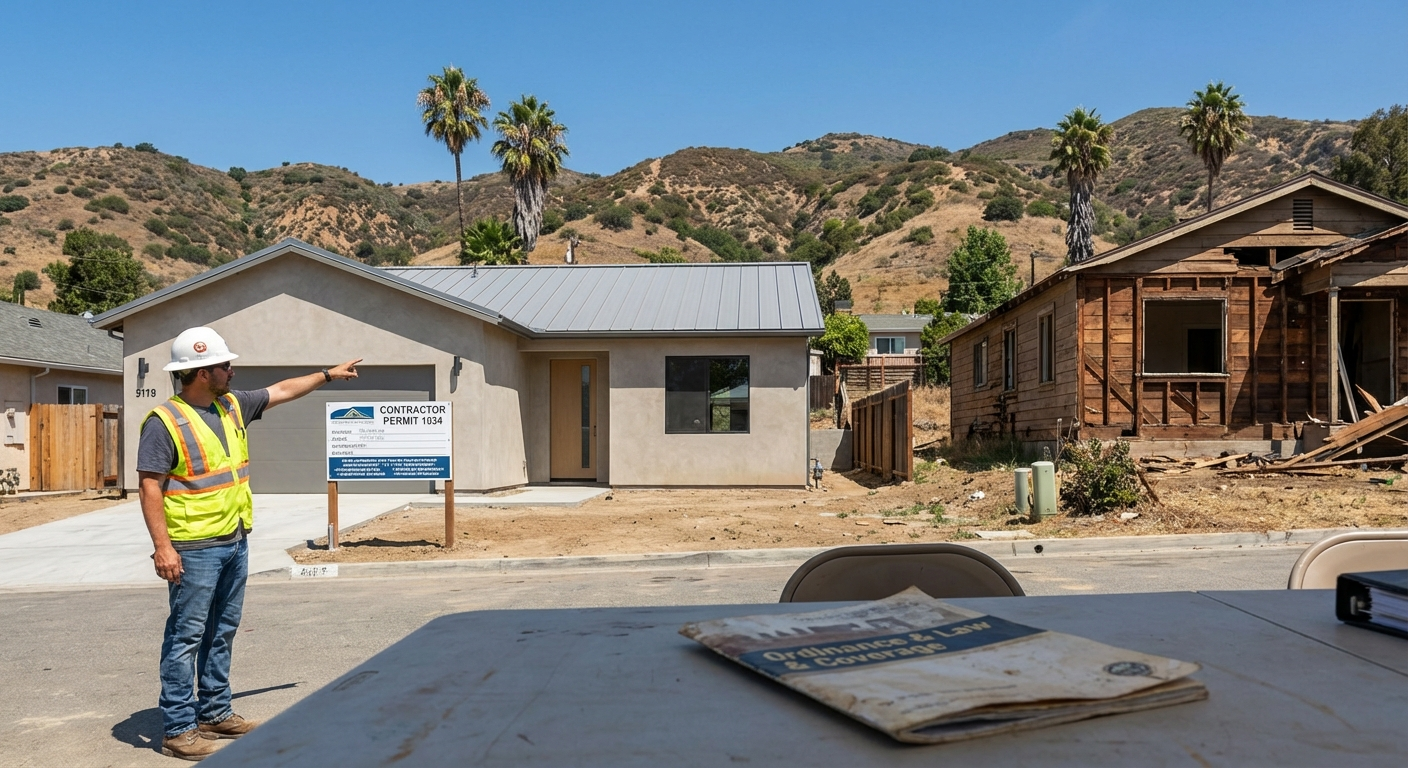
Absolutely. This is one of those things most homeowners skip over in their policy details, but it can save your bacon if you ever have a major loss. Imagine your house burns down in a fire, or gets severely damaged in an earthquake (though earthquake insurance is separate, mind you). You’ll rebuild, right? But here’s the catch: building codes change.
Local ordinances, whether you’re in the hills of Ventura County or the sprawling Inland Empire, are constantly updated. What was perfectly legal when your home was built 30 years ago might not meet today’s standards. Maybe you need to install sprinklers, or use specific fire-resistant materials, or even rebuild with a larger setback from the property line.
Your standard homeowners policy will pay to rebuild your home *as it was*. But if you don’t have enough “Ordinance or Law” coverage, you’re on the hook for the extra costs of bringing your rebuilt home up to current codes. That could be tens of thousands of dollars, easily. It’s not just a minor upgrade; it’s a legal requirement. Karl Susman at Los Angeles Home Coverage, CA License #OB75129, always stresses this point. “Don’t skimp on ordinance or law,” he often tells clients. “It’s the difference between getting your home back and facing a massive bill you didn’t expect.”
Wildfire Risk: Is There Any Hope for Getting Coverage?
This is the question on everyone’s mind, especially if you live anywhere near the Wildland-Urban Interface (WUI) – basically, where homes meet wildlands. We’ve seen the devastation from the 2025 LA fires (hypothetical, but sadly, realistic for our future), the Paradise fires, the Tubbs Fire in Sonoma County. Insurers are understandably wary.
Many standard carriers have pulled out of high-risk areas. If you’ve been dropped, or can’t find coverage, you’re probably looking at the California FAIR Plan. The FAIR Plan isn’t a regular insurance company. It’s California’s “insurer of last resort.” It provides basic fire coverage for properties that can’t get it anywhere else.
But wait — the FAIR Plan isn’t a full homeowners policy. It covers fire, smoke, and some other perils, but it often doesn’t include liability, theft, or even water damage from a burst pipe. For that, you usually need a “Difference in Conditions” (DIC) policy from another insurer to wrap around your FAIR Plan coverage. It’s a two-policy solution, and it’s not cheap.
Recently, there have been some changes to the FAIR Plan itself, including efforts to expand its coverage limits and make it a bit more robust. But it’s still a fallback, not a first choice. The state’s trying to figure out how to keep private insurers in the game, especially with the increasing severity of fire seasons.
What About Home Hardening and Discounts?
This is one area where homeowners can actually take some control. California law and regulations are starting to push for more “home hardening” measures – making your home more resistant to wildfires. This could mean replacing wood shake roofs with fire-resistant materials, clearing defensible space around your property, installing ember-resistant vents, or upgrading windows.
For most California homeowners, especially in fire-prone regions, doing these things isn’t just a good idea; it can be the key to getting or keeping affordable insurance. Insurers are beginning to offer discounts for homes that meet certain fire-resistance standards. The Department of Insurance is even working on a statewide standard for these discounts. It’s a slow process, but it’s moving.
If you’ve invested in making your home safer, make sure your insurance agent knows about it. Those efforts can sometimes make the difference between being insurable by a major carrier and being shunted to the FAIR Plan.
The Future of California Home Insurance: What’s Changing?
The short answer is yes. The real answer is more complicated. California’s insurance market is in crisis, no doubt about it. The CDI, under Commissioner Ricardo Lara, is pushing for significant reforms. One major proposal is allowing insurers to use “catastrophe modeling” to set rates.
Right now, insurers largely rely on historical data – what happened last year, or the last five years. But with climate change, past performance isn’t always a good indicator of future risk. Catastrophe modeling uses complex computer simulations to predict future losses, factoring in things like climate trends, urban sprawl, and new building codes. Many other states already allow this.
The idea is that if insurers can price risk more accurately, they’ll be more willing to write policies in California, even in higher-risk areas. This could bring back some of the carriers that have left, or encourage them to expand their offerings. But it’s a balancing act – ensuring rates remain affordable for consumers while giving insurers enough flexibility to operate profitably. It’s a contentious issue, with consumer groups often worried it will lead to higher premiums.
This whole situation is why having an independent agent like Karl Susman is so important. He’s seen it all, from the shifts after Prop 103 to the recent insurer pullbacks in places like the Valley and up near Sacramento. He understands the local nuances and can help you make sense of your options. You can reach Karl at (877) 411-5200 for a detailed discussion about your home insurance needs.
Navigating this market takes a lot of experience. You need someone who knows the carriers still writing, understands the specific ordinances in your area, and can explain what kind of coverage you truly need – not just what’s cheapest.
If you’re feeling overwhelmed by the complexities of California’s home insurance laws and the changing market, you’re not alone. Many homeowners are. But there are still solutions, and knowing the rules is your first step to finding them.
Ready to see what your options are for homeowners insurance in California? Get a personalized quote today and cut through the confusion. Click here to get started with a free quote!
Frequently Asked Questions About CA Homeowners Insurance
Q: What is Proposition 103 and how does it affect my insurance rates?
Prop 103 is a California law that requires insurance companies to get approval from the Department of Insurance (CDI) before they can change their rates. It means insurers can’t just raise your premiums whenever they want; they have to justify any increases. This is meant to protect consumers but can also make it harder for insurers to quickly adjust to rising costs, which has contributed to some carriers reducing their presence in the state.
Q: My insurance company dropped me because of wildfire risk. What are my options?
If you’re dropped due to wildfire risk, your primary option is often the California FAIR Plan. This is the state’s “insurer of last resort” for fire coverage. However, the FAIR Plan typically only covers fire, smoke, and a few other perils. You’ll likely need to purchase a separate “Difference in Conditions” (DIC) policy from another insurer to get coverage for things like liability, theft, or water damage.
Q: What does “Ordinance or Law” coverage protect me against?
“Ordinance or Law” coverage pays for the extra costs of rebuilding your home to meet current building codes and local ordinances after a covered loss. If your home is damaged or destroyed, and local rules require you to rebuild to higher standards than your original structure, this coverage helps pay for those upgrades. Without it, you could be responsible for significant out-of-pocket expenses to comply with modern codes.
Q: Are there any discounts for making my home more fire-resistant?
Yes, absolutely. Many insurers, and even the FAIR Plan, are starting to offer discounts for “home hardening” measures. These include things like clearing defensible space, installing fire-resistant roofing, upgrading vents, and using non-combustible materials. It’s always a good idea to discuss any improvements you’ve made with your insurance agent, as they could lead to savings or even help you qualify for coverage you might not otherwise get.
Feeling a bit more prepared to tackle the quirks of California home insurance? If you’re ready to explore your specific options and get clear answers, don’t wait. Get your free California home insurance quote right now.
This article is for informational purposes only and does not constitute financial advice.