
Does Your California Home Insurance Cover a Sinkhole? It’s Complicated.
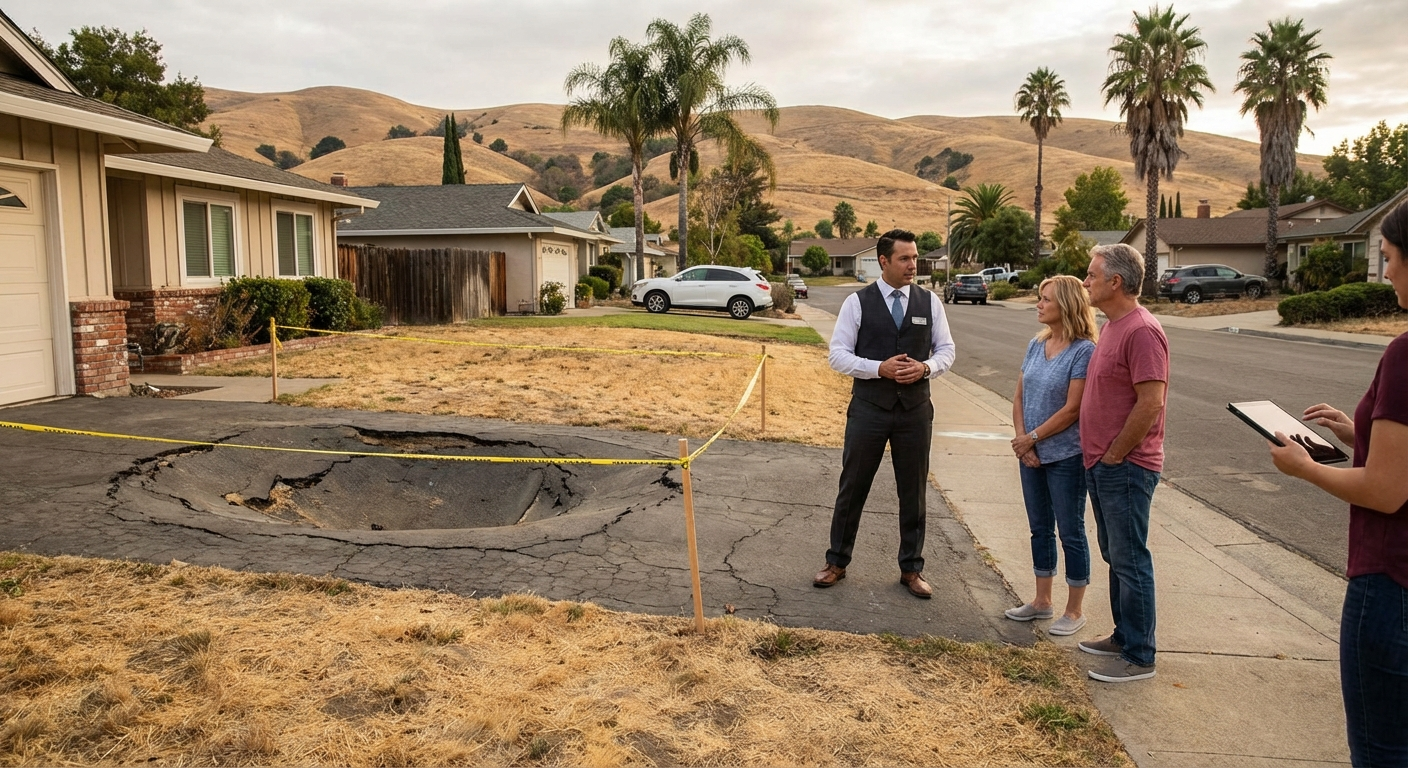
Imagine waking up to a crack running through your living room floor. Or worse, a chunk of your backyard has simply vanished. For many California homeowners, thoughts immediately leap to earthquakes or wildfires. But what about the ground just… opening up? Sinkholes, while perhaps less common here than in Florida, aren’t entirely unheard of. And when they happen, they bring a whole new level of panic.
Honestly, figuring out what your homeowners insurance policy actually covers can feel like reading ancient scrolls. It’s dense, it’s full of jargon, and the things you *think* are covered often aren’t. When it comes to something as dramatic as a sinkhole, you might assume your policy has your back. The short answer is yes. The real answer is more complicated.
The Ground Beneath Your Feet: What Standard Policies Exclude
Most standard homeowners insurance policies, often called an HO-3, are designed to protect your home from a long list of specific perils – things like fire, theft, windstorms, and burst pipes. It’s a good, broad policy, and it does a lot of heavy lifting for most homeowners.
But here’s the thing. Almost every single one of those policies has a big, glaring exclusion tucked away in the fine print: “earth movement.” This isn’t just about earthquakes, though that’s certainly part of it. It covers a whole range of ground-related disasters. Think landslides, mudslides, even the shifting of the earth under your foundation. And yes, usually that “earth movement” exclusion also applies to sinkholes.
So, if a true sinkhole — meaning the natural collapse of the ground due to erosion of bedrock, like limestone — swallows your patio furniture in Orange County, your standard policy probably won’t pay for the damage. That’s a tough pill to swallow, especially when you’re already dealing with a literal hole in your property.

When a Sinkhole Isn’t *Really* a Sinkhole (for Insurance Purposes)
But wait — sometimes, what looks like a sinkhole isn’t the kind of natural geological event that gets excluded. Sometimes, ground collapse happens because of something *else* that *is* covered by your policy. This is where it gets interesting, and frankly, a bit confusing.
Let’s say a pipe bursts under your home in the Valley, maybe an old sewer line or a water main. Over time, that leaking water erodes the soil, creating a void. Eventually, the ground above collapses. Is that a “sinkhole” in the natural geological sense? Not exactly. It’s a collapse caused by a sudden and accidental discharge of water – a peril that *is* usually covered by your homeowners policy. In this scenario, the damage from the burst pipe and the resulting ground collapse might actually be covered. Big difference.
Similarly, if construction next door undermines your soil, or if a poorly compacted fill area gives way, the cause isn’t “natural earth movement.” It’s often related to negligence or construction defects, which can open up different avenues for claims, though perhaps not directly through your standard homeowners policy itself. You’d likely be looking at a claim against the responsible party.
California vs. Florida: A Hole Lotta Difference
You’ve probably seen news reports about massive sinkholes in Florida. They’re practically famous for them. Florida’s geology – extensive limestone bedrock and lots of groundwater – makes it a prime location for these natural ground collapses. Because of this, Florida actually has specific state laws requiring insurers to offer “catastrophic ground collapse” coverage as part of standard homeowners policies.
California? Not so much. Our geology is different. We have seismic activity, sure, and some areas are prone to landslides, especially after heavy rains, like we saw in parts of Ventura County or the Hollywood Hills. But widespread natural sinkholes aren’t as common here, so our state doesn’t mandate the same kind of specific sinkhole coverage.
This means you can’t just expect it to be built into your policy. If you live in an area with a specific geological risk for sinkholes – maybe you’re near old mining operations, or have a unique soil composition – you’ll need to talk to your agent about any specialized endorsements you might need.
Beyond the Standard: Other Earth Movement Protections
Since your standard policy likely won’t cover natural sinkholes or other forms of earth movement, what are your options?
1. Earthquake Insurance: This is the big one for California. It’s almost always a separate policy or endorsement. It covers damage directly caused by earthquakes and often the resulting land shock, tremors, and sometimes even landslides or mudslides if they’re a direct result of the earthquake itself. If you’re in the Inland Empire or near a fault line in Los Angeles, you’ve probably considered this.
2. Landslide/Mudslide Endorsements: Some insurers offer specific endorsements for landslides or mudslides, particularly in high-risk areas. This isn’t standard, though, and it can be expensive. Many homeowners in hillside communities might find this worth exploring.
3. Sewer and Drain Backup Coverage: As we talked about earlier, a burst pipe can lead to ground collapse. This separate endorsement specifically covers damage from water that backs up through sewers or drains. It’s a smart addition for most homes, regardless of sinkhole risk, as it protects against a common and messy problem.
Finding Your Way Through the Insurance Maze
It’s easy to feel overwhelmed by all these exclusions and endorsements. That’s precisely why a good, independent insurance agent is so important. They don’t just sell you a policy; they help you understand what you’re buying, what you’re missing, and what risks are actually relevant to your specific property.
Someone like Karl Susman, from Los Angeles Home Coverage (CA License #OB75129), can sit down with you — or talk over the phone at (877) 411-5200 — and really dig into the specifics of your home and its location. Are you on a hillside? Is your home older, with potentially aging pipes? Are there known geological risks in your area? An agent can look at your individual situation and help you build a policy that actually protects you, rather than leaving you exposed to nasty surprises.
Don’t guess what your policy covers. Don’t assume. Ask the hard questions. Because when the ground starts to shift, you want to know you’re standing on solid insurance.
Ready to talk about protecting your home from the unexpected? Get a personalized quote today: Get Your Home Insurance Quote
Frequently Asked Questions About California Sinkhole Coverage
Is a sinkhole the same as an earthquake for insurance purposes?
No, not at all. A natural sinkhole, caused by the ground collapsing due to underlying geology, is typically excluded under the “earth movement” clause in standard homeowners policies. Earthquakes are also excluded but can be covered by a separate earthquake insurance policy. They’re distinct events with different insurance considerations.
What if a sinkhole forms because of a broken water pipe on my property?
This is where it gets tricky. If the ground collapse is a direct result of a sudden and accidental discharge of water from a broken pipe – a peril usually covered by your standard policy – then the damage might be covered. The key is the *cause* of the collapse. Your insurer would investigate this carefully.
Can I buy a specific sinkhole insurance policy in California?
Unlike Florida, California doesn’t have mandated sinkhole coverage, and specific “sinkhole only” policies are not common here. Your best bet is to discuss your property’s specific risks with an experienced agent. They can help you explore endorsements for related perils like sewer backup or, if applicable, a landslide or earth movement endorsement that might offer some protection.
How can I find out if my property is at risk for sinkholes or other ground movement?
You can start by researching geological maps for your area or looking into local planning department resources. Your insurance agent, like Karl Susman at Los Angeles Home Coverage, can also be a valuable resource. They often have access to risk assessment tools that can flag potential issues in your zip code or even at your specific address. Knowing your risks is the first step to protecting your home.
Worried about what lies beneath your home? Get answers and options by starting your personalized quote: Start Your Quote Now
This article is for informational purposes only and does not constitute financial advice.