
Building New in California? You’ll Need More Than Just Blueprints.
The Chengs finally broke ground on their dream home in Ventura County. After years of saving, sketching, and securing permits, the concrete was poured, the framing went up, and you could almost smell the fresh paint. They pictured evening BBQs on their new patio, the kids running through the backyard. Pure California bliss. But then Mr. Cheng called his old insurance agent, the one who covered their previous place in the Inland Empire. The agent sounded hesitant. “New construction in *that* area? It’s… a different ballgame right now.” The Chengs felt a sudden chill. They thought getting a brand-new house meant fewer insurance worries, maybe even lower rates. Turns out, it’s not always so simple.
The Golden State’s Tricky Home Insurance Scene
For most California homeowners, finding decent insurance has felt like a tightrope walk lately. Premiums jumped 40% between 2022 and 2024 for many folks. Some big names, like State Farm and Farmers, stopped writing new policies in certain areas entirely. It’s a mess, frankly. And if you’re building a brand-new home, especially in a wildfire-prone zone — which, let’s be honest, covers a lot of California, from the foothills of the Valley to parts of San Diego County — you’re stepping into an even more complicated situation.
Why is this happening? Wildfire risk is a huge factor. The threat of another 2025 LA fire — or something similar — looms large for insurers. Earthquake risk is always there, too. And then there’s the sheer cost of rebuilding. Labor, materials, permitting — it all adds up fast. Insurers are trying to protect themselves, which means they’re pickier than ever about what they’ll cover and at what price.

More Than Just “Homeowner’s Insurance” When You’re Building
You can’t just slap a standard homeowner’s policy on a house that’s still under construction. Not a chance. While your builder likely has “builder’s risk” insurance, that policy primarily protects *them* from damage to the structure or materials while the work is ongoing. It usually doesn’t cover your personal liability if, say, a visitor gets hurt on the construction site. It definitely doesn’t cover your personal belongings, and it won’t kick in if you’ve already started moving in furniture.
Here’s where it gets interesting. Once the certificate of occupancy is issued — meaning your new place is officially ready for you to live in — the builder’s risk policy typically ends. You need your own homeowner’s insurance in place *before* that happens. Lenders require it, of course. But even if you’re paying cash, going without coverage for even a day is a massive gamble. Imagine a pipe bursts the night before you move in, or someone breaks in and vandalizes the brand-new kitchen. You’d be on the hook for thousands.
The Hunt for Coverage: What California Insurers Look For
When you’re trying to insure a new build in California, insurers are going to scrutinize a few things with a microscope.
Location, Location, Location — Still True
Even if your house is brand spanking new, its address still matters most. Is it in a high wildfire severity zone? Near an earthquake fault line? Insurers use sophisticated mapping tools, looking at vegetation, slope, wind patterns, and access roads for firefighters. They’re also checking the proximity to fire hydrants and fire stations. A new home in a less risky area, say, a dense urban core, will generally be easier — and less expensive — to insure than a gorgeous custom build nestled in the hills of Malibu or the forests of Lake Arrowhead.
Building Materials and Design Choices
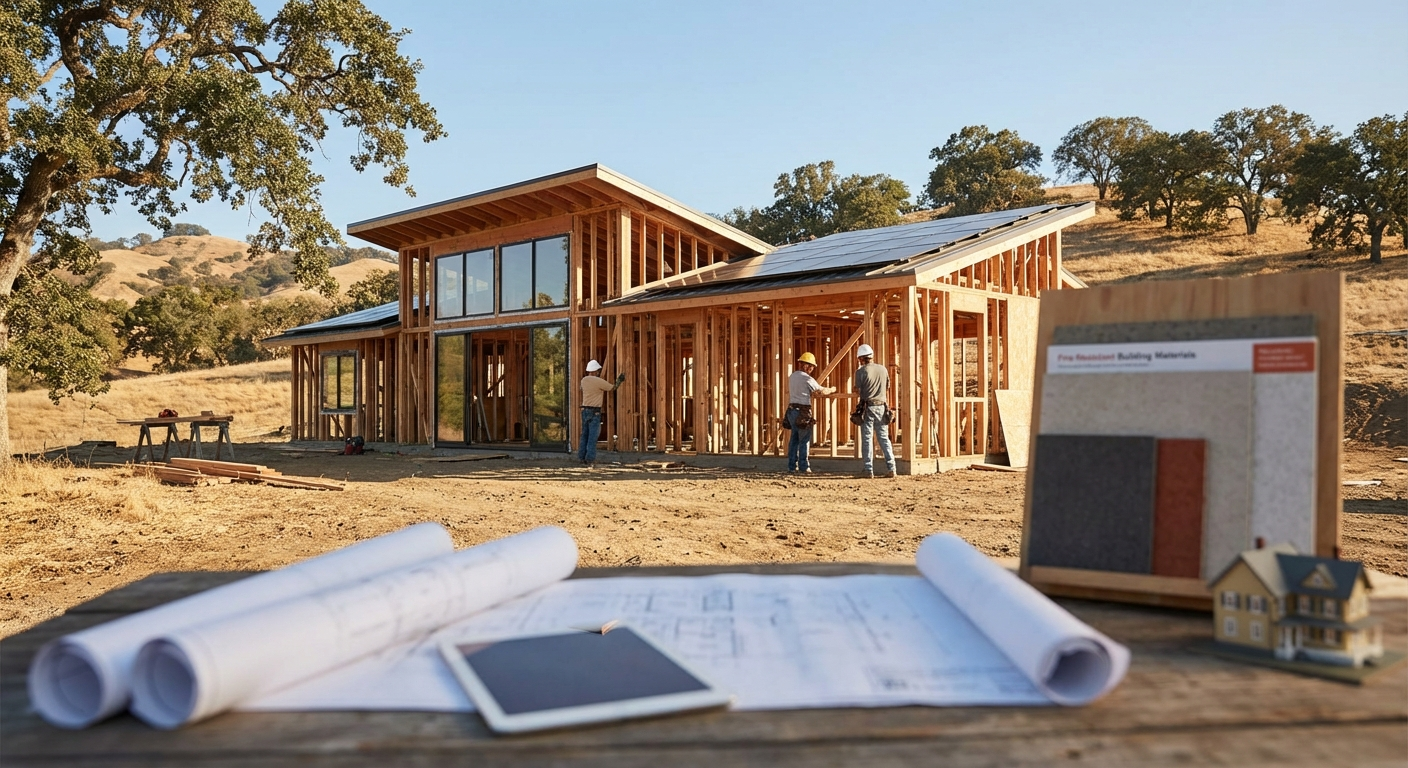
This is where new construction can actually be an advantage. Are you using fire-resistant roofing materials? Think metal, tile, or composition shingles with a Class A fire rating. What about exterior walls? Stucco or fiber cement siding offers better protection than untreated wood. Is there defensible space around your home? That 100-foot perimeter of cleared vegetation isn’t just a suggestion; it’s a lifeline for your home and a big factor for insurers. Many new developments are designed with these fire-hardening principles built-in, which helps. Some even have community-level mitigation efforts that can improve your chances.
But wait — even with all the right materials, a home perched on a steep slope overlooking a canyon in, say, Santa Clarita, still presents more risk than one on a flat lot in an established neighborhood.
Navigating the California Home Insurance Maze
Finding the right policy isn’t about simply going online and clicking “get a quote.” Especially not in California today. Many standard carriers are pulling back. This means you might need to look beyond the big names you’ve always heard of.
Sometimes, you might find a smaller, regional insurer willing to take on the risk. Other times, you might end up with the California FAIR Plan — an “insurer of last resort” that provides basic fire coverage when no one else will. The FAIR Plan isn’t a full homeowner’s policy; it doesn’t cover things like liability or water damage. You’d need a “difference in conditions” (DIC) policy to fill in those gaps. It’s complicated, expensive, and not ideal, but it’s often the only option for some properties.
Which brings up something most people miss. Even if you get a FAIR Plan policy, you still need to find a DIC policy *from another carrier*. That’s two policies to manage, two deductibles, and two sets of rules. It adds complexity, for sure.
The Role of a Good Broker
This is precisely why working with an experienced insurance broker is so important, especially for new construction in California. A broker like Karl Susman at Los Angeles Home Coverage, CA License #OB75129, doesn’t just work for one insurance company. He works for *you*. He understands the quirks of the California market, knows which carriers are still writing policies, and can help you piece together coverage even when it seems impossible. Think of it as having an expert guide you through a dense forest.
Karl and his team know the questions to ask your builder, what details insurers really care about, and how to present your new home in the best light to potential carriers. They can explain the ins and outs of Prop 103, which dictates how rates are approved here, and how recent changes might affect your premium down the line.
Remember the Chengs? After that initial discouraging call, they reached out to Karl Susman. He helped them understand that while their Ventura County location was indeed challenging, their builder’s fire-resistant roof and the community’s defensible space plan were significant positives. Karl found them a policy that wasn’t cheap, but it was comprehensive, and it wasn’t the FAIR Plan. That was a huge relief. They could finally focus on picking out kitchen tiles instead of worrying about losing their life savings.
Want to see what options are out there for your new California home? It’s never too early to start the conversation.
Get a Home Insurance Quote Today!
Common Questions About Insuring a New Build in California
What’s the difference between “builder’s risk” and “homeowner’s” insurance?
Builder’s risk insurance primarily protects the construction project itself, covering damage to the structure or materials while the home is being built. It’s typically held by the contractor. Homeowner’s insurance, on the other hand, covers the finished home, your personal belongings, and provides liability protection once you move in.
When should I start looking for homeowner’s insurance for my new build?
Honestly, as soon as you have firm plans and a completion date. Don’t wait until the last minute. The California market is tough, and it can take time to find the right coverage. Getting a head start ensures you’re not scrambling when your builder hands over the keys.
Will a new home automatically be cheaper to insure?
Not always. While new construction *can* qualify for discounts due to updated building codes, better materials, and modern systems (plumbing, electrical), your home’s location and the current state of the California insurance market often outweigh these benefits. A new home in a high-risk wildfire zone might still be expensive to insure.
What if I can’t find traditional insurance for my new home?
If traditional insurers won’t cover your property, you might need to turn to the California FAIR Plan. It’s the state’s “insurer of last resort,” providing basic fire coverage. But remember, you’ll need a separate “difference in conditions” (DIC) policy to cover other perils like liability, theft, and water damage. It’s definitely more complex than a standard policy.
Securing insurance for new construction in California requires a proactive approach and a deep understanding of the local market. Don’t go it alone.
Find Your New Home’s Insurance Solution Here.
For personalized guidance on insuring your new California home, reach out to Karl Susman at Los Angeles Home Coverage, CA License #OB75129. You can call his team directly at (877) 411-5200.
This article is for informational purposes only and does not constitute financial advice.